Historic Carriage Houses and Where to Find Them in Manhattan
Historic carriage houses in Manhattan feature average ceiling heights of 10 to 14 feet, extra-wide building footprints up to 25 feet, and average listing prices exceeding $12,500,000. Originally built in the 19th century to house horses and carriages, these rare single-family homes are concentrated in the West Village, Upper East Side, Sniffen Court, and Turtle Bay.
Searching for Historic Single-Family Residences?
Select your primary search path to review active townhouse and carriage house listings across Manhattan:
Direct private advisory: Contact Raphael De Niro
Enclave / Neighborhood | Primary Architectural Era | Key Property Features | Typical Price Range |
|---|---|---|---|
West Village (e.g., Charles St) | 1830s to 1880s Federal & Victorian | Private garden courtyards, secluded rear access | $10,000,000 – $22,000,000 |
Upper East Side (e.g., E 83rd St) | 1890s to 1920s Beaux-Arts & Neoclassical | Up to 7,500 sq ft, private garages, roof decks | $15,000,000 – $35,000,000 |
Sniffen Court (Murray Hill) | 1860s Civil War Era Brick Mews | Gated private court, 10 historic brick mews units | $8,000,000 – $16,000,000 |
Kips Bay (e.g., E 29th St) | Late 18th / Early 19th Century Wooden Frame | Rare pre-industrial wooden frame structures | Private Off-Market Value |
New York City's carriage houses evoke a bygone era, a time when the rhythm of horse-drawn carriages echoed through cobblestone streets and elegant mansions stood with private stables behind them. Today, these storied structures are among Manhattan's most prized and rare residences.
For clients seeking extraordinary real estate, historic carriage houses offer a singular blend of heritage, architecture, and exclusive urban living.
What Is a Carriage House and Why They Matter
Carriage houses were ancillary structures built in the 18th and 19th centuries to house horses, carriages, and related gear. Often attached to or situated directly behind opulent townhouses, they served a practical transport need long before the advent of the automobile.
Over time, as horse-drawn transport gave way to cars, many carriage houses were lost or demolished. The surviving structures are regarded as architectural treasures, generous in proportion, historically evocative, and fully converted for contemporary luxury living.
Carriage houses feature layouts distinct from standard rowhouses. Built to accommodate stables and carriages, they are frequently wider than typical townhomes and offer soaring 10 to 14-foot ceiling heights, creating vertical spaciousness rare in Manhattan.
Where in Manhattan to Find Carriage Houses
Because carriage houses are exceptionally scarce, identifying the specific micro-neighborhoods where they remain is essential for buyers.
West Village
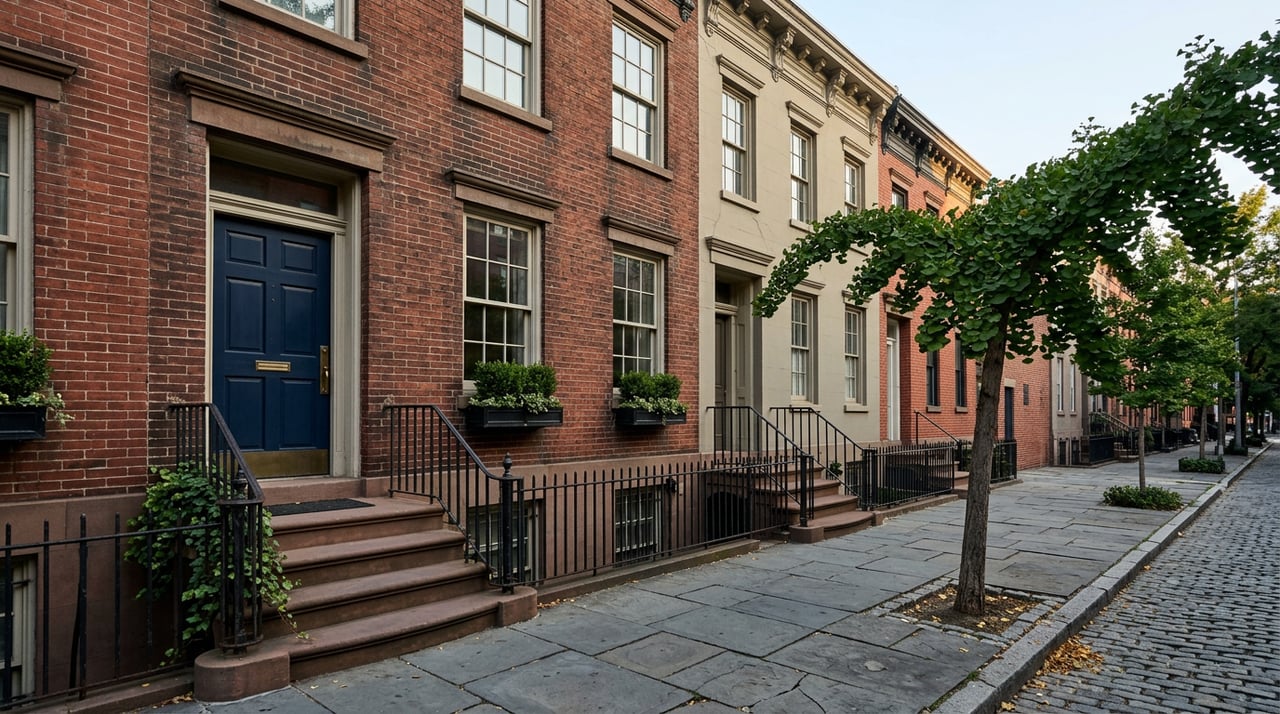
The West Village remains a primary enclave for historic carriage houses. A notable example is located at 131 Charles Street, where a Federal-style townhouse built in 1834 is complemented by a 1889 brick carriage house entered via a private courtyard passage.
- 131 Charles Street Landmark: Charles St between Greenwich St and Washington St, New York, NY 10014, NYC Individual Landmark.
- Nearby Practical Amenity: D'Agostino Supermarket, 666 Greenwich St, open daily 7:00 AM to 10:00 PM.
Upper East Side
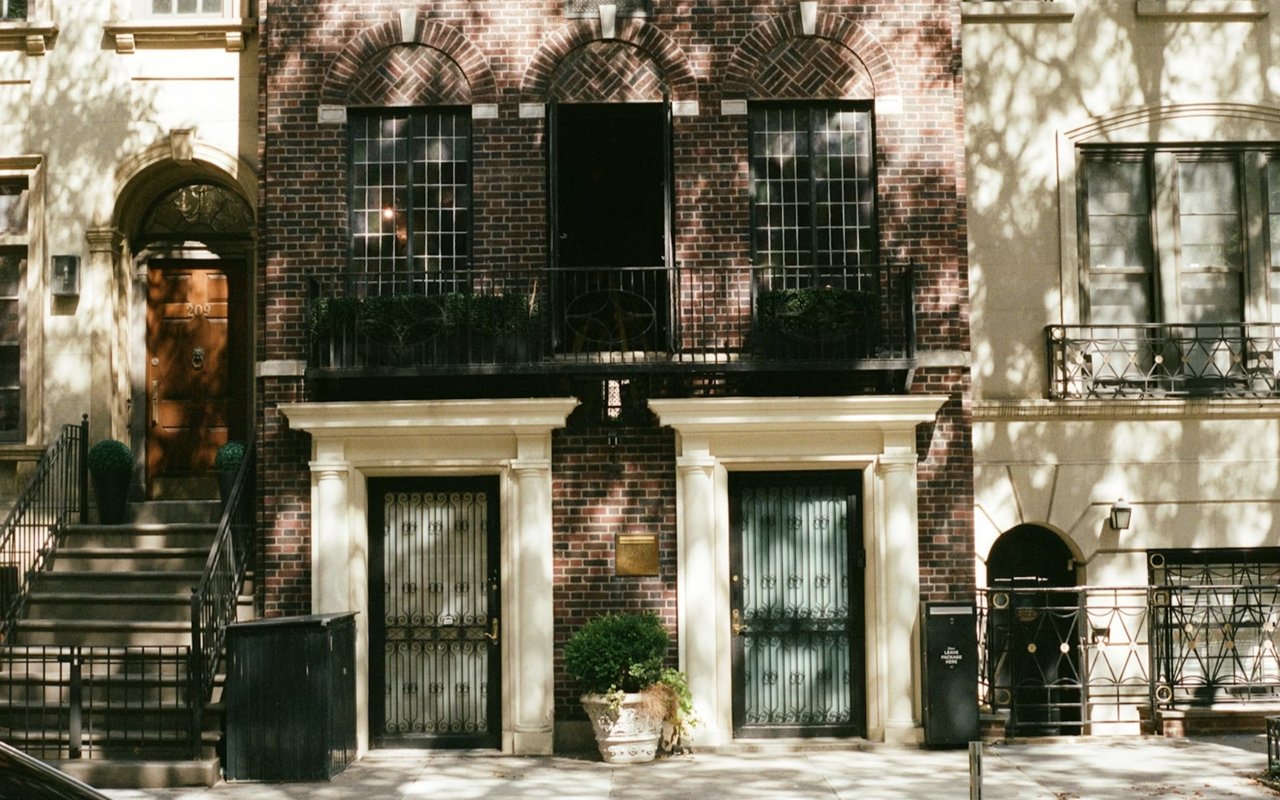
East 83rd Street between Lexington and Third Avenues features grand carriage houses spanning over 7,500 square feet, complete with curb cuts for private garages, roof decks, and garden terraces. Neoclassical limestone carriage houses originally designed by architect C.P.H. Gilbert in 1920 stand as prime examples of this architectural style.
- East 83rd Street Carriage House Row: Located on East 83rd St between Park Ave and 3rd Ave, New York, NY 10028.
- Nearby Practical Amenity: Eli's Market, 1411 3rd Ave, open daily 7:00 AM to 9:00 PM.
Sniffen Court Historic District (Murray Hill / Midtown East)
Sniffen Court is a gated mews located off East 36th Street between Third and Lexington Avenues. Built in the 1860s, this landmarked alley contains ten brick carriage houses surrounding a private cobblestone courtyard.
Kips Bay / Midtown East
Located at 203 East 29th Street is one of Manhattan's rarest surviving wooden-frame carriage houses, dating back to the early 19th century. It stands as a protected individual landmark and a glimpse into pre-industrial residential New York.
Turtle Bay Gardens Historic District
Spanning East 48th and East 49th Streets between First and Second Avenues, Turtle Bay Gardens features 20 Italianate brownstones with shared interior garden courtyards that mirror the privacy and charm of the carriage-house era.
Why Carriage Houses Are So Coveted
- Architectural Character: High ceilings, original beam woodwork, brick archways, and wood-burning fireplaces provide grandeur unattainable in modern high-rises.
- Privacy and Autonomy: As standalone single-family homes, carriage houses eliminate shared hallways and elevators while offering private curb cuts and garages.
- Historical Heritage: Originally built for prominent New York banking and merchant families, carriage houses connect owners to the city's architectural legacy.
- Modern Luxury Conversions: Meticulous renovations integrate chef's kitchens, passenger elevators, glass atrium roofs, and integrated smart-home automation.
Tips for Carriage House Buyers
- Prepare for Scarcity: Carriage houses represent less than 0.1% of Manhattan residential housing stock and rarely appear on the open market.
- Evaluate Preservation Board Rules: Most carriage houses reside within NYC Landmarks Preservation Commission (LPC) districts, requiring approval for exterior alterations.
- Verify Deeded Garage Curb Cuts: Private garage doors require grandfathered NYC Department of Transportation curb-cut permits.
- Access Off-Market Inventory: Partnering with connected luxury real estate advisors ensures access to pocket listings before public release.
Historic Real Estate Advisory Powered by De Niro Team
Raphael De Niro | Founder & Managing Director, De Niro Team at Douglas Elliman Real Estate
NY Real Estate Broker License #10351201284 | Over $5 Billion in career residential transactions across Manhattan, Brooklyn, and luxury global markets.
The De Niro Team specializes in historic single-family townhouses, carriage houses, and off-market residential acquisitions in the West Village, Upper East Side, and Downtown Manhattan.
Frequently Asked Questions About Manhattan Carriage Houses
What is the average price of a carriage house in Manhattan?
Carriage houses in prime Manhattan neighborhoods generally range from $8,000,000 for unrenovated mews structures up to $35,000,000 for fully restored, wide-footprint residences with private garages and outdoor space.
Do Manhattan carriage houses have private garages?
Many converted carriage houses retain their original street-level carriage entrances, which have been modernized into private attached garages with legally grandfathered NYC curb cuts.
Are carriage houses subject to landmark preservation restrictions?
Yes. Most carriage houses in Manhattan are located within designated NYC Landmarks Preservation Commission districts (such as the West Village or Sniffen Court), meaning exterior restorations must adhere to historic guidelines.
Historical details and architectural data verified via NYC Landmarks Preservation Commission, Museum of the City of New York, and OneKey MLS real estate database.