Walk past 1 Clarkson Street on any given afternoon and you'll see the same thing you've seen since 2019: scaffolding holding up a vaulted ceiling, a landmarked facade with protective netting bolted to the stone, and a building that hasn't let a swimmer through its doors since 2021. If you grew up doing laps at the Carmine Street pool, or you moved to the West Village later and just heard the stories, you probably assume the fight over the Tony Dapolito Recreation Center is a fight to get that pool back.
The debate now includes more than restoring the pool. A new six-lane pool is coming to the neighborhood regardless of what the city decides to do with the old bathhouse on Clarkson Street. The real argument left on the table, the one that gets a hearing at Community Board 2 on September 9, is whether a 118-year-old landmarked building gets torn down once its replacement opens a block away, or whether the city finds a second life for it.
The Building Everyone Thinks They're Fighting For
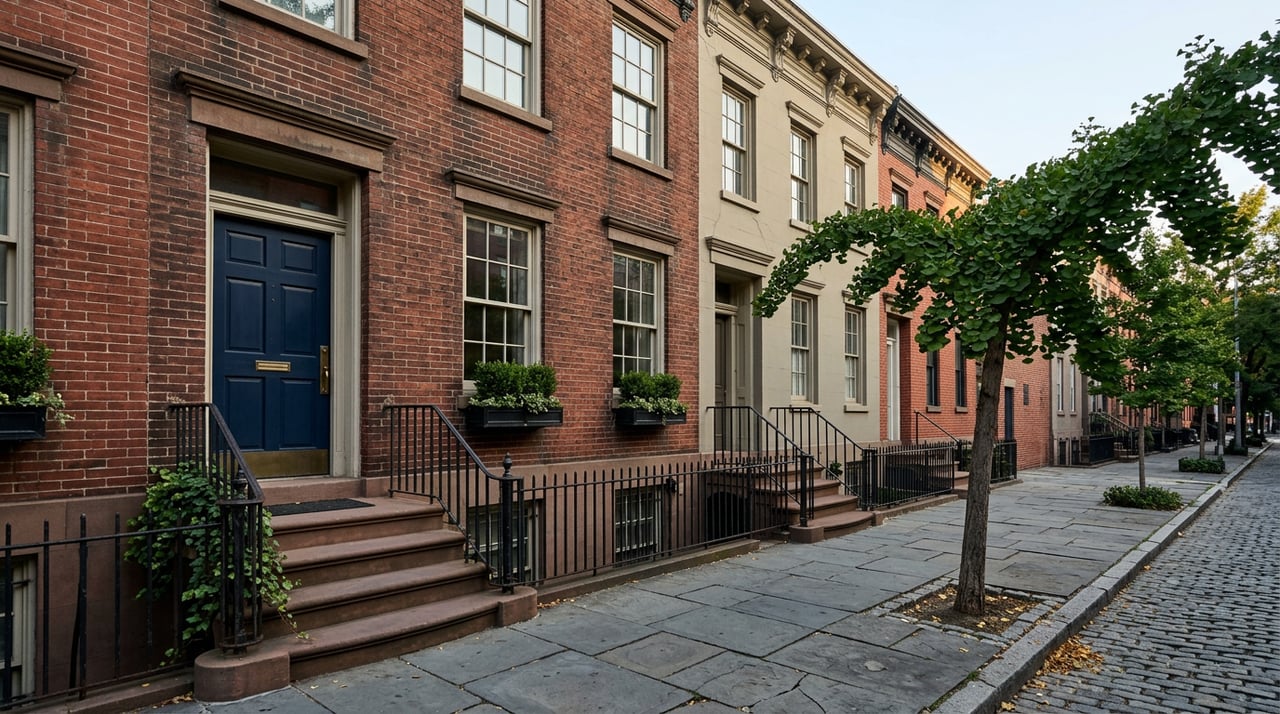
The outdoor pool at Dapolito closed in 2019 for structural repairs. What was supposed to be routine renovation work instead turned up damage serious enough that the city shuttered the entire complex, indoor pool included, within a couple of years. The building itself predates most of the neighborhood around it. It opened in 1908 as a public bathhouse, was later named for longtime community board member Tony Dapolito, and was landmarked in 2010 as part of the Greenwich Village Historic District Extension II, the same designation that protects the low-rise blocks most people picture when they think of this part of the city.
That history is real, and it's why Village Preservation, the advocacy group led by Andrew Berman, has spent years pushing the city to repair rather than raze it. But a block away at 388 Hudson Street, a separate project has been moving forward that changes the stakes of that fight. In December 2025, the city selected Camber Property Group, working with Services for the UnderServed and Essence Development, to build Hudson Mosaic, a Herzog & de Meuron-designed tower that will pair roughly 280 units of affordable housing with a Parks Department recreation center built into the lower floors. That recreation center is planned to include a six-lane indoor pool, a regulation-size basketball court with a running track, and a full slate of fitness space, all owned and operated by the same Parks Department that runs Dapolito.
The Hudson Mosaic plan adds another dimension to the discussion: alongside recreation access, the future of the 1908 building is also at issue.
What the Released Records Say About Repairs
The city's case for demolition has rested on the claim that Dapolito is too far gone to fix. In March 2026, a Freedom of Information Law request filed by Sommer Omar, founder of the Coalition to Save the Public Recreation Center Downtown, surfaced internal Parks Department records that complicate that claim. Among them was a 2021 email from a Parks representative to an architect working on the building, stating plainly that the structure could be temporarily shored up so the facility could reopen, with more detailed timing to follow. Preservationists have since argued that nothing in the released file set says the building has to come down, only that repairing it would mean a smaller footprint: a two-lane pool instead of three, a basketball court that doesn't meet regulation size, and an indoor track that wouldn't be ADA accessible.
That's a real tradeoff, not a fabricated one. But it's a tradeoff between two working recreation centers, not between a working center and a demolished lot. Once Hudson Mosaic's pool opens, a smaller, imperfect Dapolito would still be an addition to what the neighborhood has, not a downgrade from nothing.
Funding Figures for Dapolito
Ask how much money is actually on the table for Dapolito and you'll get two different answers depending on when you ask. Mayor Adams' proposed fiscal year 2026 budget included $51.8 million specifically for reconstructing the center, including a rebuilt pool house and preservation of the Keith Haring mural that runs 170 feet along the outdoor pool wall. By this spring, city officials speaking to reporters were citing a larger figure, roughly $100 million, framed as funding to bring the site into a state of good repair. Neither number has been retracted. The city described the first as funding for reconstruction and the later figure as funding to bring the site into a state of good repair.
Here is a timeline of key events and next steps:
| Date | What happened |
|---|---|
| 1908 | Building opens on Clarkson Street as a public bathhouse |
| 2010 | Landmarked as part of the Greenwich Village Historic District Extension II |
| 2019 | Outdoor pool closes for structural repairs |
| 2021 | Renovation work uncovers deeper damage; indoor building closes too |
| February 2023 | Community Board 2 cites the closure in a resolution supporting new recreation space at 388 Hudson Street |
| December 2025 | City selects Camber Property Group to build Hudson Mosaic at 388 Hudson |
| January 2026 | Zohran Mamdani takes office having pledged during his campaign to save Dapolito |
| March 2026 | FOIL documents surface, including a 2021 internal email describing the building as repairable |
| August 5, 2026 | Parks Commissioner Tricia Shimamura tells CB2 the city will still pursue demolition, calling it more efficient |
| September 9, 2026 | CB2 Parks Committee meets on 388 Hudson plans; advocates plan to press for a Dapolito repair alongside it |
How a New Pool Could Shape the Debate
In the spring, Berman said he would leave the debate over a two-lane versus three-lane pool to others. He suggested pickleball courts or a weight room for the old pool space if the building survives. With a six-lane pool planned for Hudson Mosaic, the discussion also includes what other uses the old space could serve.
Councilmember Wilson joined Manhattan Borough President Brad Hoylman-Sigal in a joint letter on the Dapolito Center as recently as August 11, following years of similar letters from Councilmember Erik Bottcher, who has represented the district through most of this fight. That August 11 letter, alongside one from Village Preservation and the broader preservation coalition sent the same day, followed Shimamura's early-August comments reaffirming the demolition plan. The letter renewed attention to whether the city would honor that campaign commitment.
What Happens September 9
The next concrete date on the calendar is Wednesday, September 9, at 6:30 p.m., when the Parks Department reports to Community Board 2's Parks Committee on its plans for 388 Hudson Street. Village Preservation has framed this as the moment to insist that any recreation facilities built at Hudson Mosaic be paired with, not substituted for, a repaired and reopened Dapolito. Whether the city treats the two buildings as complements or as one replacing the other is likely to become clearer at that meeting than it has been at any point so far this year.
For a neighborhood that has watched this play out across two mayoral administrations, several rallies, and a records request, the September 9 meeting won't resolve the argument. It may, however, clarify what, if anything, survives at 1 Clarkson Street once the planned Hudson Mosaic pool is complete.
You can follow the Parks Department's own project updates through its Clarkson Street Corridor page, and Village Preservation maintains a running archive of letters, FOIL documents, and meeting updates on the Dapolito fight for residents who want the primary sources rather than the secondhand version.
Whatever the city decides, it's the kind of civic detail that shapes daily life on these blocks long after the news cycle moves on, and it's exactly the sort of neighborhood texture we track closely at The De Niro Team, because understanding a place well enough to advise on it starts with paying attention to the parts of it that have nothing to do with real estate. If you're thinking about property in the West Village or anywhere else downtown, we'd welcome the chance to talk. Work With Us.